
 Jo Cooper is the Founder of The Good Warrior, an author, artist, and systems reform leader whose work examines how disrespect, silence, and abuses of power become embedded in institutions, workplaces, and communities.
Across sectors, those who challenge harm are celebrated until the challenge comes from within. In domestic violence prevention, that contradiction is hardest to stomach.
For much of my life, I believed the greatest resistance to challenging injustice would come from those responsible for it.
I was wrong.
Resistance does not always come from the obvious source. Sometimes it comes from people who speak the same language, invoke the same principles, and publicly claim to want the same change.
That resistance is harder to recognise because it presents itself as solidarity.
My work is not confined to one cause or sector. I examine the behaviours that allow harm to become normalised across institutions, industries and communities. The systems may differ, but their methods of self-protection are remarkably consistent.
When an uncomfortable question is raised, attention shifts from the question to the person asking it.
Scrutiny becomes hostility. Correction becomes bullying. Independence becomes an unwillingness to collaborate. A challenge to power is reframed as evidence that the challenger is difficult, aggressive or motivated by ego.
I have encountered this pattern in legal disputes, institutional reform and public campaigns. But nowhere has it been harder for me to stomach than in the domestic violence sector.
This field asks society to believe victims, challenge abuses of power, and intervene when people are being silenced. When character attacks, gatekeeping and distortions of legitimate policy scrutiny emerge within that same sector, they expose a contradiction we cannot afford to ignore.
When Lived Experience Becomes Professional Authority
Image Credit – The Good Warrior
I am a survivor of violence, but survivor is not my profession. Victim describes what was done to me. It does not describe what I do.
That experience shapes my history and informs how I recognise harm, but it is not the limit of my authority. My professional work examines how bullying, abuse and harmful behaviour become normalised, how institutions protect damaging systems and how those systems can be challenged and redesigned.
Domestic violence reform is one application of that work. It is not the boundary of it. I have followed the same patterns of power, silence, retaliation and institutional self-protection across different sectors.
I do not ask to be recognised professionally because I survived harm. I ask for my work to be assessed on its evidence, intellectual contribution, demonstrated outcomes and capacity to create positive change in communities.
I draw this distinction not to diminish the value of lived experience. I make it because people with lived experience are too often confined to a narrow role.
They are welcomed when they tell their stories. Their experiences can humanise a campaign and demonstrate the consequences of institutional failure. The response can change when they move beyond testimony and begin analysing law, testing evidence or challenging those already recognised as experts.
A survivor who describes harm may be considered courageous. A survivor who questions the proposed solution may be considered obstructive.
A survivor who supports an established position may be amplified. A survivor who identifies weaknesses in that position may be accused of undermining the campaign.
This creates an unspoken hierarchy. Survivors are invited to supply experience, while established institutions, academics and organisations retain the authority to interpret it.
We are allowed to speak about what happened to us. We are not always permitted to determine what should happen next.
This is survivor testimony without survivor leadership.
When Expertise Is Reframed as Abuse

Image Credit: The Good Warrior
I have never asked to be protected from scrutiny.
My achievements do not make me infallible. My experience does not mean you must accept every conclusion I reach. If my legal analysis is wrong, demonstrate where it is wrong. If the evidence supports another conclusion, present that evidence. If a proposal I support contains risks, identify them.
That is how serious policy work should proceed.
What is not acceptable is substituting an attack on my character for an answer to the legal and safety questions I have raised.
I have challenged public claims about law reform and watched the discussion move almost immediately from the substance of those claims to allegations about my personality, motives and treatment of other women.
A technical disagreement becomes a story about competition. A correction becomes an attempt to silence another survivor. A request for evidence becomes bullying. A warning about safety becomes a lack of solidarity.
This rhetorical shift is powerful because it makes scrutiny itself appear harmful. Once the person asking the question has been labelled a bully, the original question no longer needs answering. I recognise that strategy, and I will not be intimidated.
That is not accountability. It is avoidance, a way of discrediting the person so the substance can remain unexamined. Power does not become virtuous merely because it speaks the language of care.
Accuracy Is a Safety Obligation
Image Credit: The Good Warrior
Public interest does not erase authorship, intellectual contribution or the professional work required to develop and advance reform. Those who have navigated its legal complexity and spent years building public and political support have both a right and a responsibility to correct damaging misrepresentations.
Accuracy matters because the consequences of getting law reform wrong are not simply reputational. The moral worth of reform is measured not only by what it intends, but by the risks its design creates.
They can affect whether victims seek help, what information they receive, who bears responsibility for assessing risk and whether a disclosure increases or reduces danger.
This is why distinctions between legal models matter.
A controlled domestic violence disclosure scheme and a public register are not interchangeable. They operate differently, rely on different information and create different risks.
A properly designed disclosure scheme allows police to assess relevant information and decide what to disclose, to whom, and under what safety conditions. A public register may be limited to qualifying convictions and can reveal only the information legally permitted for publication.
The public register model currently being promoted by some is based on a law that requires a qualifying conviction, judicial discretion and the victim’s consent before a perpetrator can be publicly identified.
That consent requirement raises serious questions.
What happens if a victim fears retaliation?
What happens if the perpetrator pressures her to refuse?
What happens if publication could identify her or her children?
What happens if she cannot safely participate in the process?
What happens when there is substantial evidence of risk but no qualifying conviction?
These are not attacks on the survivor promoting the proposal. They are questions about legal design, implementation and victim safety.
Lived experience gives every survivor the right to contribute to reform. It does not make every policy proposal safe. Nor does it exempt claims about law from evidence and scrutiny.
When a proposal affecting victim safety is promoted as easier, earlier or more effective than another model, those claims must be tested.
Scrutiny is not hostility. It is part of the responsibility of reform.
Professional Work Deserves Professional Recognition

Image Credit – The Good Warrior
Academics, politicians, stakeholders and charities all document their intellectual contributions. They preserve records of authorship, protect original materials and expect accurate attribution. Why should less be expected of a business simply because it is led by a survivor?
I do not claim ownership of domestic violence or the general idea of disclosure reform. But the research, strategy, written materials, campaign assets and community knowledge developed through my work did not appear from nowhere. They were built through years of labour, personal investment and contributions from people who trusted the campaign.
I fund my campaign through The Good Warrior because I believe business can be a force for good. I choose not to accept government funding because independence is central to my ability to scrutinise power without fear of jeopardising funding or access. That choice carries a cost, but it also protects the work’s integrity.
Professional sustainability prevents reform from depending on the indefinite financial, physical and emotional sacrifice of the person leading it. Social purpose should not require professional self-erasure.
Collaboration does not require surrendering authorship, attribution or intellectual property. Collaboration is a method, not a moral obligation, and it is valuable only when it respects contribution, preserves integrity and improves the outcome. Protecting the provenance of professional work is not ego. It is the same standard applied to work produced by other professionals, businesses, academics, politicians, stakeholders and charities.
If the sector genuinely supports survivor leadership, it must permit survivors to become CEOs, founders, researchers, strategists and authorities. A survivor should not have to remain vulnerable, unpaid and institutionally dependent in order to remain believable or valuable.
The Racial Authority Gap

Image Credit- Jo Cooper/The Good Warrior
I also cannot separate these experiences from being a woman of colour. The cumulative pattern is difficult to ignore.
I have watched expertise receive immediate respect when it is expressed through an established academic or institution, then be treated as aggression when I express it directly. I have also watched politicians dismiss my work while extending credibility to others whose authority is more familiar or comfortable to them.
Confidence becomes arrogance.
Correction becomes hostility.
Independence becomes an inability to work with others.
The same conduct that establishes authority in some people is used to question character in others.
Women of colour often learn that it is not enough to possess expertise. We must continually prove that we are entitled to exercise it. We are expected to soften conclusions, reassure those we challenge and demonstrate gratitude for being included in conversations our work helped create.
If we speak firmly, the firmness becomes the subject.
If we correct the record, our tone is examined more closely than the inaccuracy.
If we refuse to surrender ownership of our contribution, we risk being portrayed as territorial or self-important.
I am not asking anyone to accept my conclusions because of my race, gender or experience. I am asking for my work to be scrutinised at the level at which it exists.
If I make a legal argument, answer the legal argument. If I identify a safety risk, examine the risk.
Do not erase years of legal reform, corporate governance and systems disruption by reducing me to just another survivor and characterising my refusal to remain silent as bullying. I did not fight to reclaim my voice only to soften it for those unsettled by my authority. I am a woman anchored in principle, and I will not become smaller so others can remain comfortable.
We Are Not All Working Towards the Same Thing
“We are all working towards the same thing” is often presented as reassurance. But when it is used to end scrutiny, it becomes a thought-terminating cliché, a demand for unity that protects the appearance of solidarity at the expense of truth.
Using the same language does not mean we are applying the same principles.
Some people are working to change systems. Others are working to preserve or create a position for themselves within them. The difference becomes visible in whether they meet scrutiny with evidence or try to discredit the person raising it.
Some welcome scrutiny because they understand that evidence and policy must withstand challenge. I personally love being challenged, as it is an opportunity to learn or correct.
Others experience scrutiny as a threat to their authority.
Some want the strongest possible reform. Others appear more invested in being recognised as the person or organisation responsible for delivering it, even when the evidence or safety concerns remain unresolved.
Working towards the same thing should mean more than sharing vocabulary. It should mean applying our principles when doing so threatens our relationships, influence, funding or standing within a community. A principle that governs us only when convenient is not a principle. It is a preference.
It should mean refusing to excuse harmful conduct because the person responsible is an ally.
It should mean acknowledging another person’s work even when doing so disrupts a preferred account of how change occurred.
It should mean recognising that someone who challenges established thinking is not necessarily an enemy of progress. Sometimes that person is the reason progress happens.
Solidarity Is Not Immunity From Scrutiny
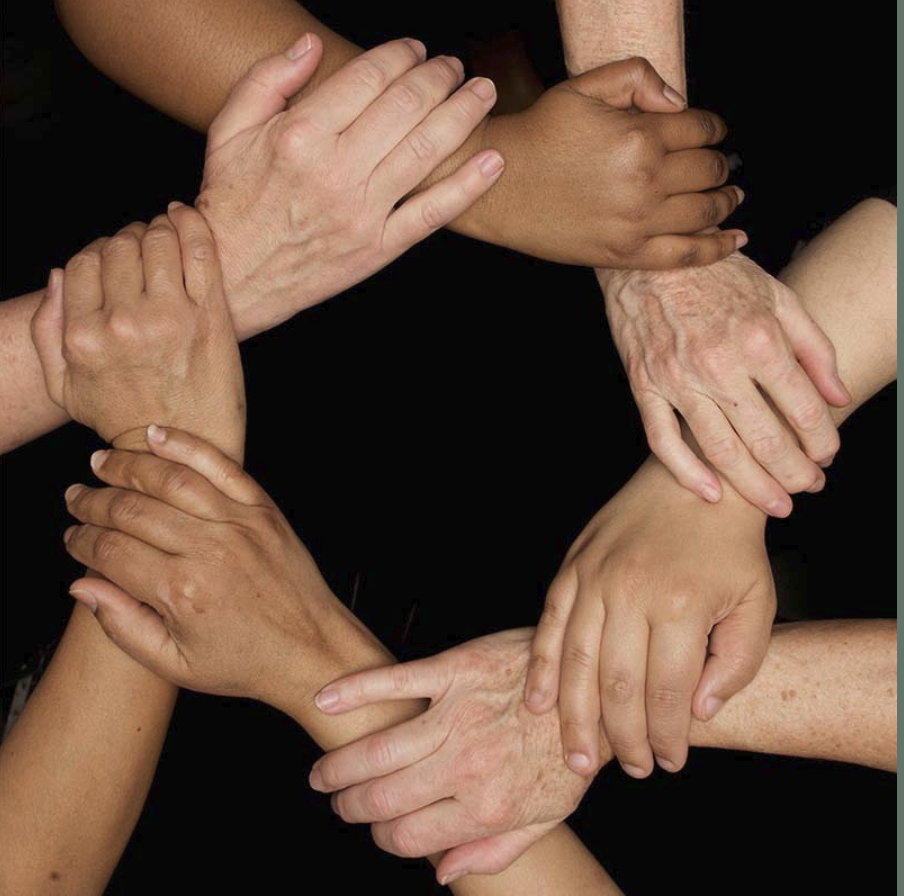
Image Credit – The Good Warrior
There is a dangerous confusion between solidarity and silence. Solidarity without truth becomes collusion with whatever the group is unwilling to confront.
Solidarity does not require women to agree with one another. It does not require us to overlook unsafe proposals, inaccurate claims or harmful conduct for the sake of appearing united.
A campaign becomes intellectually weak when it treats questions as betrayal. It becomes ethically compromised when accountability is demanded from outsiders but resisted internally.
Disagreement is not the problem.
Every serious campaign needs people willing to test assumptions, examine evidence and challenge approaches that may not work as intended. I would never treat my work in any other sector any differently.
The problem begins when disagreement becomes character assassination, exclusion, appropriation or gatekeeping.
It begins when private relationships determine whose expertise is recognised. It begins when protecting a reputation becomes more important than correcting the record.
It begins when the language of safety is used to silence the scrutiny that meaningful safety requires.
The Competition We Refuse to Name
We also need to be honest about competition within social reform.
There is competition for funding, influence, recognition, media attention and ownership of ideas. Scarcity may help explain that competition, but it does not excuse what people choose to do with it. I remain independent of government funding partly to avoid those incentives, yet independence does not prevent others from applying informal pressure to trade attribution, silence or access for acceptance.
Too often, another woman’s achievement is treated as a diminishment of our own. I do not work that way. Nor will I surrender work that my business and community have invested years in building simply to make my authority more comfortable for others.
Instead of asking how her work might strengthen a campaign, people ask what her recognition will mean for their position within it.
Instead of engaging with a difficult question, they question the motives, personality or credibility of the person raising it.
Instead of acknowledging a contribution, they absorb it into a collective account in which the person responsible gradually disappears.
These are not harmless professional tensions. They are familiar methods of controlling whose knowledge counts and whose authority is permitted to grow. I take my work seriously and professionally, and I will not participate in practices that diminish it because I am a woman or a woman of colour.
This strategy shapes whose evidence is heard, whose expertise is recognised, which reforms receive support and who is permitted to participate in decisions.
In the domestic violence sector, the contradiction is particularly painful. A sector committed to recognising coercion and challenging silence cannot reproduce those dynamics internally and expect to remain credible.
You cannot condemn reputational abuse while distorting the character of women whose questions inconvenience you.
You cannot call for survivor leadership while excluding survivors from technical and policy authority.
You cannot demand accountability from governments while refusing to correct your own public claims.
You cannot ask society to intervene in harmful behaviour while choosing silence when that behaviour comes from someone on your side.
Courage Before It Becomes Safe
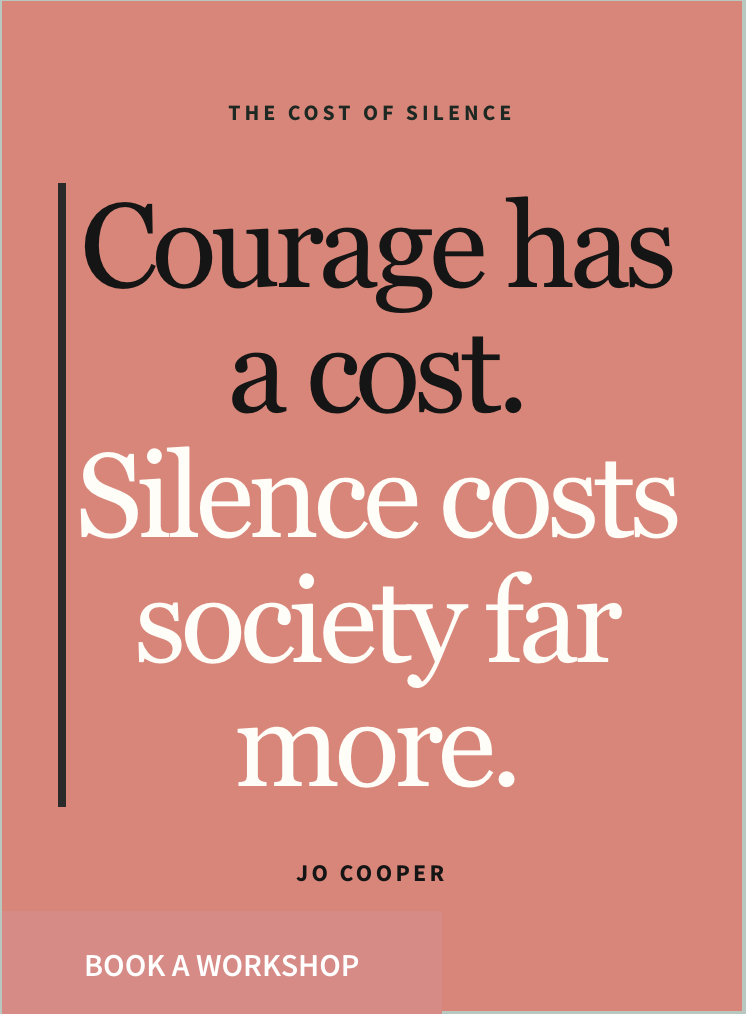
Image Credit – The Good Warrior
We have become very good at celebrating courage in retrospect.
Once a battle has been won, institutions and individuals can praise the person who challenged them. Campaigns can adopt her language. Organisations can point to the outcome as evidence of progress.
But how was she treated while the result was uncertain?
Was she supported?
Was she believed?
Was her work acknowledged?
Did those who privately agreed with her speak publicly?
Was she protected from retaliation?
Or did people wait until the risk had passed?
This is the test of a campaign’s integrity.
Not the public statements.
Not the carefully constructed language of empowerment and solidarity.
The test is what happens when someone challenges your authority, disputes accepted evidence or refuses to participate in a convenient silence.
Courage should not become respectable only after it stops threatening anyone.
This Is Not an Attack on Reform

Image Credit – The Good Warrior
Some will argue that speaking about these problems damages the campaigns seeking change. I believe the opposite.
Silence does not protect a campaign. It protects the conditions within it that people are afraid to examine.
A campaign committed to reform should be capable of confronting its own use of power. It should be able to distinguish between a threat to its purpose and a threat to someone’s position within it.
It should welcome evidence even when the evidence is uncomfortable.
It should correct the record when another person’s work has been overlooked.
It should create room for disagreement without converting dissenters into enemies.
Most importantly, it should reject the idea that internal accountability weakens collective action.
Trust cannot be built through performance. It is built by demonstrating that the principles promoted publicly also govern behaviour privately. A principle applied only to opponents is not accountability. It is strategy.
If a campaign cannot tolerate honest examination of its own culture, how can it credibly ask every other institution to do the same?
When Solidarity Becomes Silence
My work has taken me through different institutions, laws and causes. I have not moved randomly from one issue to another. I have followed the same patterns of power, silence and institutional self protection across different systems.
Domestic violence reform is not the boundary of that work. It is one of its most urgent applications, and the place where the contradiction between professed values and permitted behaviour has been hardest for me to accept.
Women do not need to agree on everything. Being a woman or having survived abuse does not create an entitlement to demand from another woman what would be unacceptable in any other professional setting. Imagine asking an architect to surrender years of plans without attribution because housing is a public good, or a medical researcher to hand over original work because health belongs to everyone. We would recognise that as exploitation, not collaboration. Social purpose does not cancel professional authorship, and lived experience does not grant permission to diminish the leader who built the work or business to be able to fund that work.
Kindness does not require silence, and honesty does not require cruelty.
We can challenge one another’s ideas without attacking one another’s humanity. We can acknowledge competing evidence without treating the person presenting it as a rival. We can amplify another woman’s contribution without believing her recognition reduces our own.
No individual, academic, organisation or campaign will solve these problems alone.
But solidarity that demands silence is not solidarity.
A sector that punishes people for raising legitimate questions will eventually become another system that protects itself from accountability. This is why accomplished professionals sometimes step away, not because they have stopped caring, but because constant personal conflict demands that they re-enter the very chaos they worked hard to rise beyond.
The most painful betrayal is not always committed by someone who openly rejects your values.
Sometimes it comes from someone who speaks in the language of those values while using them to justify how they treat you. Until we are prepared to confront that contradiction, meaningful prevention and reform will remain an uphill battle.
We cannot build cultures of courage while punishing the people who practise it. We cannot challenge harmful systems while reproducing their defensive behaviour.
And we cannot dismantle abuses of power while refusing to examine the power we hold ourselves. I will continue to question systems and individuals that produce harm and to hold abuses of power to account. What I will not do is distort another person’s work or manufacture outrage to avoid scrutiny of my own.
That is the conversation we are still far too reluctant to have