
(And How to Decline the Role)

About The Author
Vivian Lizzy Page is a PhD student whose research centres on femininity and authority through the lens of Lacan’s theoretical work. TikTok:@lizzyzpage0
I’d love to tell you this is an article about a certain kind of commenter, the one who craves the spotlight and treats strangers as props. It sort of is.
But the more useful question turns out to be a different one: Why do I so often agree to play the extra?
Four ways of talking to each other
French psychoanalyst Jacques Lacan noticed that when people speak, they’re rarely just exchanging information. Every conversation quietly sets up roles: who speaks from authority, who is expected to respond, and what’s being asked of whom. He described four basic arrangements, which he called discourses. I’ll call them postures, because none of us lives in just one. We slip between them all day. I’ve also renamed a couple, because some of Lacan’s labels get in the way.
Unexamined mastery: “Because I said so.”
This is the voice of authority that has never been questioned. It doesn’t explain or ask. It declares, and it expects the other person to fall into line. The tone is often confident, arrogant or even contemptuous.
But here’s where it gets interesting: the confidence is usually covering something. The speaker can’t afford to be questioned, because the authority isn’t as solid as it sounds. Underneath may be a fear of being ordinary, or of not mattering to the person being addressed. That’s why I say “unexamined”. The mastery survives only as long as nobody looks at it, including the person speaking.
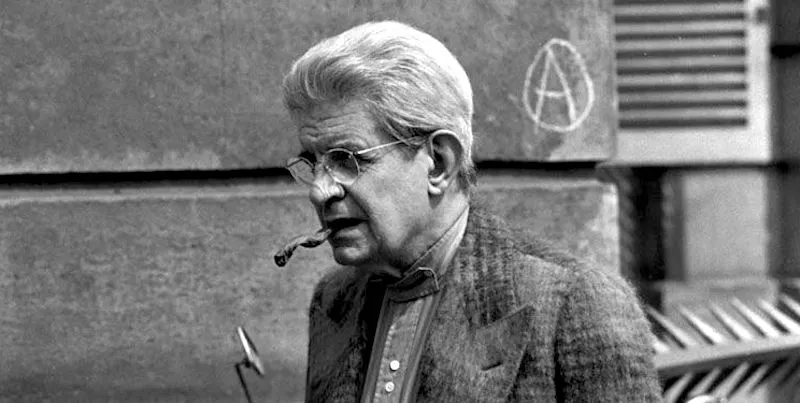
French psychoanalyst Jacques Lacan. Photo from Remembering My Father, Jacques Lacan.
The University: “Those are the facts.”
This voice sounds neutral. It cites rules, evidence, procedures and expertise. It’s the voice of the policy, the statistic and the “well, actually”. We need it, but Lacan’s suspicion was that a command often hides behind the neutrality: accept this, and don’t ask who decided it. In a way, the discourse of the university exists like a quirky sharehouse where scientific enquiry, ideology and dogma live together.
Divided address: “Something’s wrong, and you need to explain it.”
Here the speaker is torn, unsure or aggrieved, and turns to someone with authority and demands an answer. It refuses to take authority at face value, pokes at gaps and protests. That’s uncomfortable to receive, but it’s how unexamined claims get examined. Much of what we call outrage lives here. The “divided” part is that the speaker usually half-knows something is off in themselves as well as in the other. This is also the posture of rumination and hyperfixation.
The Analyst: a question left open.
The fourth is the unusual one. The speaker doesn’t command, argue or protest. They ask something and then wait. There’s no verdict and no attempt to win. The other person is left with their own words, and sometimes hears them for the first time.
To illustrate, I offer my first interaction on a Lacanian psychoanalyst’s couch.
- “Why do you want to undertake an analysis?”
- “To be a better person.”
- “Why would you want that?”
That was it. No reassurance, no agreement, no correction. I’d offered what felt like a perfectly good answer, and it was returned to me as a question I hadn’t thought to ask.
Why this matters when you’re being insulted

Take a situation I recently came across: a prominent lawyer left an objectively rude comment on Deputy Green’s leader Steph Hodgins-May’s Instagram post, under his own name. His speech was that of unexamined mastery, delivering a verdict on a woman he’d never met and expecting it to stand. I won’t bore you with the specifics.
What interests me is what happened next. She didn’t submit, and she didn’t trade insults. She called him directly and asked what he meant by it. When he denied it was violent, they went back and forth, and she ended the call.
I’m not holding this up as a template, and I’m not asking you to enter the debate. I only want to point out that she refused the role the comment was offering, and that refusing a role is possible. You can’t make someone else stop speaking from unexamined mastery, but you can decline to play the person they’re addressing. You can decide you don’t need their permission to be your own main character.
What to do with this

The idea isn’t that you should analyse every nasty comment you meet. It’s smaller than that. The next time a comment gets under your skin, you can ask a quiet question: what role is this offering me?
Sometimes the answer is obvious. You’re being cast as the person who should feel stupid, or the one who must prove themselves, or the one who’ll lose their temper and make the commenter look right. Just seeing the role can loosen its grip. The sting comes partly from the words and partly from the sense that you have to respond, and the second part is often easier to put down than the first.
This isn’t a way of letting abusers off the hook. Understanding the structure behind a cruel comment doesn’t make it harmless, and some behaviour warrants a formal complaint or legal action. Seeing a pattern is for steadying yourself. It isn’t a reason to excuse anyone, or to tell someone who’s been hurt that they’re overreacting.
It’s also not an invitation to go looking. When we read an exchange like the one I described, it’s tempting to want the name, the workplace, the rest of the story. I’d gently suggest that curiosity is part of the same pull. The interesting thing about the structure is that it isn’t about one man. Anyone can find themselves speaking from unexamined mastery on a bad day, and anyone can be on the receiving end. If you’re moved to comment on that case, you’ve probably been drawn into the same arrangement.
Stepping back is the more interesting choice.
One important note: this is a way of thinking, not a treatment or a solution. If online cruelty is affecting your sleep, your work or your sense of safety, a concept won’t be enough, and talking to a professional or a support service is worth doing.
Every comment section is full of casting calls. Some come from strangers, and some come from our own wish to be the one who’s right. The invitation is the same either way: notice the part you’re being offered, and take a moment before deciding whether to play it or pass.