
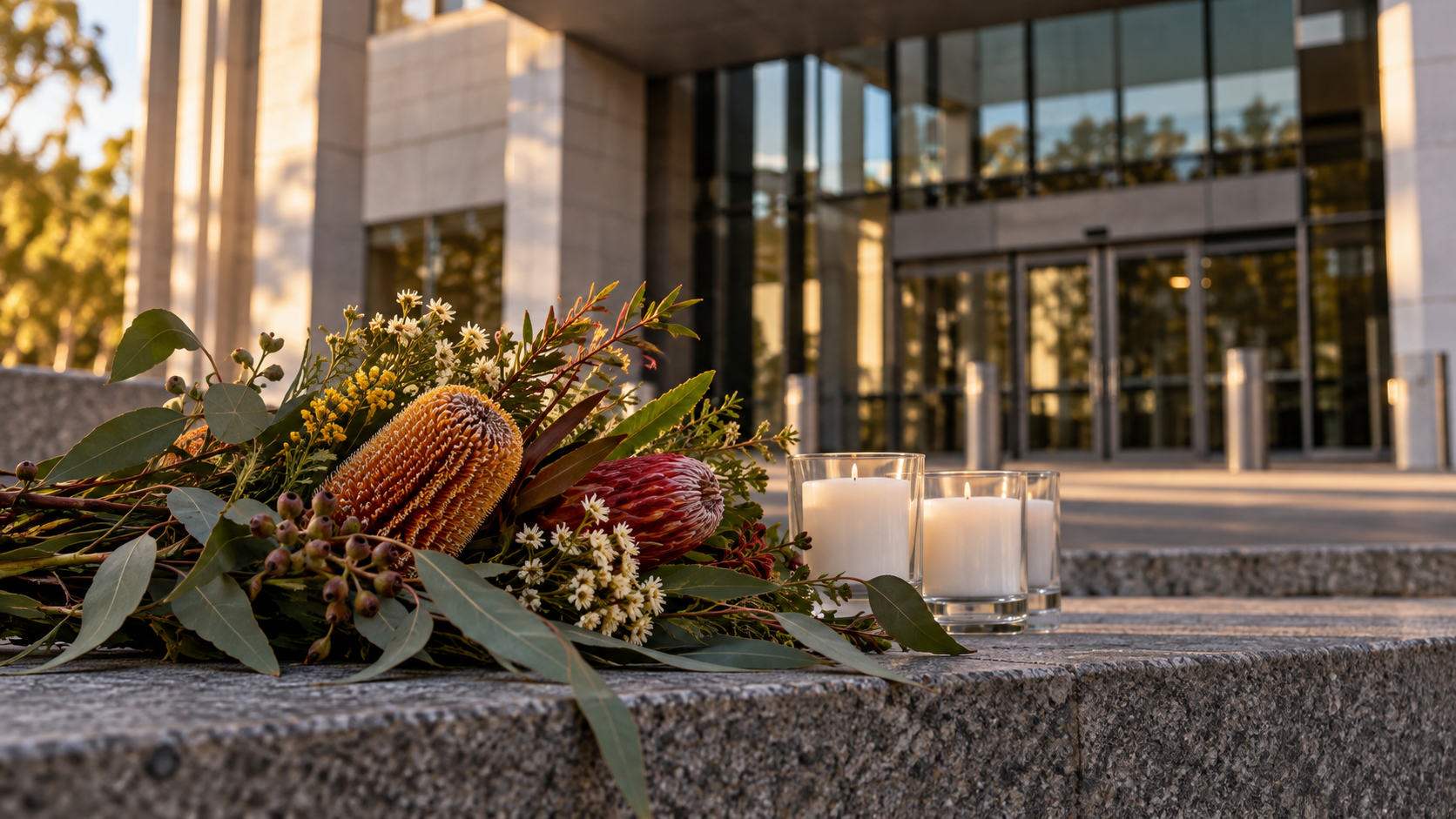
This article discusses domestic and family violence and the deaths of First Nations women.
If this article brings up difficult feelings, support is available. 13YARN provides confidential, culturally safe crisis support from Aboriginal and Torres Strait Islander crisis supporters. Call 13 92 76, available 24 hours a day, seven days a week.
For domestic, family or sexual violence counselling and support, call 1800RESPECT on 1800 737 732, text 0458 737 732, or visit 1800respect.org.au for online chat, available 24/7.
If you or someone else is in immediate danger, call 000.
The intimate partner homicide rate among First Nations women more than doubled in two years, while sexual violence reports reached their highest level, according to a major new report on Australia’s response to gender-based violence.
The Domestic, Family and Sexual Violence Commission’s 2026 Yearly Report to Parliament found the intimate partner homicide rate for First Nations women increased in each of the two years following the National Plan’s 2022–23 baseline.
By 2024–25, it had reached the highest level in the available data series and was more than twice the baseline rate.
Hospitalisations of First Nations women following family violence assaults remained high at approximately 783 per 100,000 women. The rate rose above the National Plan baseline, countering the reduction promised under Closing the Gap.
The report also found hospitalisations of Aboriginal and Torres Strait Islander children following family violence assaults increased sharply in 2023–24, reaching their highest level in the available data.
The findings form part of the Commission’s assessment of progress under the National Plan to End Violence against Women and Children 2022–2032.
While Australia increased investment, strengthened specialist services, and established new national governance arrangements, the Commission found these reforms haven’t produced a coordinated response or shown that women and children are safer.
Domestic, Family and Sexual Violence Commissioner Micaela Cronin said Australia should measure its progress against whether gender-based violence had become “rare, brief and non-recurring”.
The report found intimate partner homicides of women had declined substantially from the higher numbers recorded during the 1990s and early 2000s.
However, the number rose in 2023–24 before falling again in 2024–25. The Commission said it lacks sufficient post-baseline data to determine if the latest decline is a sustained improvement.
The national indicator measures women killed by a current or former intimate partner using data from the Australian Institute of Criminology’s National Homicide Monitoring Program. It does not include women killed by other family members, acquaintances or strangers.
Sexual violence reports reach record levels
Police-recorded sexual violence offences are now at their highest level since national recording began in 1993.
The Commission warned the official figures represent only a portion of the violence in the community because reporting to police remains low.
Approximately six in 10 incidents of sexual violence occur outside family and intimate partner relationships, according to the report.
The Commission said sexual violence has too often been treated as an addition to broader domestic and family violence reform, despite having distinct drivers, impacts, and service and justice needs.
It called for sexual violence to receive separate and properly resourced priority under the National Plan.
Crisis response alone will not reduce violence
The report found government investment remains concentrated in crisis, emergency, and justice responses after violence escalates.
While those services remain essential, the Commission said crisis responses alone will not reduce gender-based violence prevalence.
It called for greater investment in early intervention through health, mental health, education, child and family services.
This includes intervening earlier with men who use or risk using violence, supporting healthier views of masculinity among boys and young men, and recognising children affected by violence as victim-survivors in their own right.
The Commission said government systems are still largely designed to respond to isolated incidents rather than patterns of coercive control, grooming, and escalating abuse.
It also warned many systems continue to operate as though gender-based violence affects a small minority of Australians, despite evidence showing it affects at least half the population and possibly a majority over a lifetime.
Housing crisis preventing women from reaching safety
Housing and financial insecurity are major barriers preventing women from leaving violence and rebuilding their lives.
Almost one in four specialist homelessness service clients experiencing family and domestic violence had unmet accommodation needs in 2024–25.
That proportion changed little since the National Plan baseline and remains much higher than a decade ago.
Persistent homelessness among women and children affected by family violence rose sharply in 2024–25, reaching its highest level in the examined period.
The Commission said safe housing, financial security, legal assistance, healthcare, and counselling must be essential parts of Australia’s violence-prevention infrastructure, not separate social policy concerns.
Justice systems continue to cause harm
The report also raised serious concerns about the experiences of victim-survivors in the justice and family law systems.
Despite reforms, evidence from people with lived experience shows these systems continue to prolong or compound harm rather than consistently deliver safety, accountability, and recovery.
It called for further justice and family law reform, including measures to ensure children’s experiences, safety concerns, and views were independently recognised.
It stressed that an increase in police proceedings, protection-order breaches, and recorded offences does not necessarily show progress. Greater justice system activity may reflect increased reporting or enforcement but does not prove fewer people are using violence.
Progress cannot be properly measured
One of the report’s most significant conclusions is that Australia still lacks timely, consistent data to determine whether the National Plan is working.
Only five of the nine measures currently used to assess the National Plan’s national targets have new data since the 2022–23 baseline, and four of those five measures relate to Closing the Gap Target 13.
Data gaps, inconsistent definitions, and delays in national reporting mean governments can track programs and expenditure without clearly showing if those investments improve safety.
The Commission recommended establishing a National Evidence Collaboration to connect research, administrative data, program evaluations, domestic violence death reviews and the expertise of people with lived experience.
It also called for stronger national monitoring and accountability mechanisms that can hold federal, state and territory governments responsible for outcomes.
The report made eight recommendations, including greater investment in early intervention, stronger coordination across government, reform of justice and family law systems, dedicated action on sexual violence and the co-design of policies with communities facing the greatest barriers to safety.
It said responsibility for preventing violence must extend beyond specialist services to housing, immigration, social security, education, health, employment, policing and the courts.
The Commission concluded that Australia largely understood what an effective and integrated response should look like. The remaining challenge was whether governments would provide the leadership, investment and accountability required to build it.
Read the Domestic, Family and Sexual Violence Commission’s 2026 Yearly Report to Parliament.