
 By Vanessa Tobias – Investigative journalist focused on gender inequality, gender-based violence and holding power to account.
Australia has spent over a decade strengthening laws, funding services and developing national strategies to address violence against women. As governments prepare the next stage of the National Plan, the ongoing scale of violence raises the question: why have years of reform not produced consistently safer outcomes?
Australia doesn’t lack policies intended to address gender-based violence. We have a 10-year National Plan, a federal Domestic, Family and Sexual Violence Commissioner, multiple criminal justice reform programs and decades of inquiries documenting institutional failures.
Yet rates of violence remain unacceptably high, sexual violence reports have reached record levels, and First Nations women continue to experience vastly disproportionate harm.
The Domestic, Family and Sexual Violence Commission’s 2026 Yearly Report to Parliament found that police-recorded sexual violence offences were at their highest level since national figures were first released in 1993.
The intimate partner homicide rate for First Nations women also reached its highest point in the available data series in 2024–25, more than doubling from the National Plan’s 2022–23 baseline.
The findings reveal a central contradiction in Australia’s response to gender-based violence: governments have created more laws, plans and services but still can’t show the system is making women and children safer.
The next stage of the National Plan
The federal government is developing the Second Action Plan under the National Plan to End Violence against Women and Children 2022–2032.
The National Plan is organised around four areas: prevention, early intervention, response, and recovery and healing. Its stated ambition is to end gender-based violence within one generation.
As the plan reaches its midpoint, the Second Action Plan will guide funding and resource allocation for the next phase.
The Domestic, Family and Sexual Violence Commission has warned this stage must do more than continue what it’s currently doing. It must improve coordination, target funding to effective approaches, and establish stronger mechanisms to measure whether government decisions improve safety.
The Commission has also called for sexual violence to receive distinct and properly resourced priority within the National Plan. Almost 60 per cent of sexual assaults recorded by police occur outside family and intimate partner relationships.
Sexual violence often intersects with domestic and family violence but also occurs in workplaces, educational institutions, sporting organisations, social settings, and other relationships. Treating it only as an extension of domestic and family violence risks overlooking its distinct causes, institutional settings, and justice and service needs.
A patchwork of laws and systems

In New South Wales, for example, the Crimes Act 1900 criminalises conduct including assault, sexual assault and intimidation. Other jurisdictions have their own offences, definitions, evidentiary rules and protection-order systems.
A person’s legal options and experience differ depending on where they live, which institution they encounter, and how that institution views the violence.
The admissibility of relationship, context, tendency and coincidence evidence can be particularly important in serious domestic violence proceedings involving murder, sexual assault or assault occasioning bodily harm.
Domestic and family violence rarely involves a single incident. Evidence of previous threats, coercive control, intimidation, or escalating abuse might be essential to explain the context of the alleged offence.
Courts must decide whether evidence is relevant. And whether its value outweighs the risk of unfair prejudice. These rules can make it hard to show the full pattern of abuse while protecting the accused’s rights in a criminal trial.
Sexual assault and the limits of criminal justice
 The Australian Attorney-General’s Department commissioned a national review of child sexual abuse and sexual assault legislation as part of the Standing Council of Attorneys-General’s Work Plan to Strengthen Criminal Justice Responses to Sexual Assault 2022–2027.
The reform agenda includes examining whether legal frameworks protect victim-survivors and improve their experiences in the justice system. It overlaps with the Australian Law Reform Commission’s examination of justice responses to sexual violence.
These reforms are significant, but changing legislation doesn’t automatically change what happens when someone reports violence. Victim-survivors still have to navigate police interviews, evidentiary requirements, delays, cross-examination, and the possibility that a case never goes to trial. Many also face health, housing, financial, immigration, child-protection, and family law systems at the same time.
The Domestic, Family and Sexual Violence Commission found that victim-survivors still report having negative experiences with the justice system, family law, health care, education, and community services.
The main issue is not just whether something is a crime. What matters is whether people can easily report abuse, whether authorities recognise coercion patterns, and whether survivors can find safety without risking housing, income, children, or immigration status.
The same system does not serve everyone equally
The consequences of these gaps are not distributed evenly. First Nations women are over 33 times more likely to be hospitalised and six times more likely to die from family violence-related assault than non-Indigenous women. Women with disability also face disproportionately high rates of intimate partner, sexual, and physical violence and additional barriers to reporting and support.
The Commission’s latest report found family violence hospitalisations among First Nations women remained extremely high, at approximately 783 per 100,000 women.
It called for policies and services to be designed with the people who face the greatest barriers to safety, including First Nations women and children, women with disability, culturally diverse and migrant communities, LGBTIQA+SB people and those living in regional and remote Australia.
Inviting people with lived experience to share their stories is not enough. Their insights should influence how services are managed, how risks are assessed, and how governments make funding decisions.
Sport and institutional protection
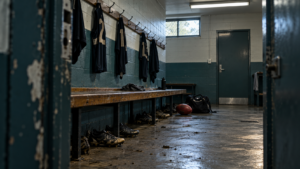 Studies on gender-based violence in Australian sport found there are gaps between how institutions handle integrity and what victim-survivors actually experience.
Sport integrity frameworks usually address issues like doping, match-fixing, child safety, and risks to legal or reputational standing. However, adult gender-based violence is often overlooked because it falls between the responsibilities of sporting bodies, employers, police, and specialist services.
A legalistic approach usually focuses on following rules and protecting the institution from legal trouble. However, this can mean that keeping survivors safe and giving them control is not a priority. Reporting problems can be confusing and inconsistent, especially when sports organisations handle complaints about their own members.
It’s not just about having a policy in place. People need to know how it works, feel comfortable reporting problems, and be able to get help from someone outside the system. They should feel the institution cares about them, not just its image.
Migrant women and the assumption that survivors can leave
Most common responses to family violence encourage people to leave to be safe. This assumes a victim-survivor has a safe place to go and can access income, housing, legal advice, and services without risking other parts of her life.
Leaving an abusive situation is often more difficult for African Australian and other migrant women. They might have uncertain visa status, struggle with language barriers, rely financially on their partner, feel isolated from their community, or worry about losing their children.
If someone depends on their abuser for housing, a job, or safety, that dependence gives the abuser almost complete control. Safety plans that focus only on leaving don’t help women whose legal or financial situations make leaving dangerous or impossible. To create real change, reforms should focus on the systems that allow violence to happen. Rather than placing all the responsibility on one woman to leave.
When institutions know but fail to act
For years, investigations into child sexual abuse have revealed the same issues. Institutions overlooked warning signs, minimised complaints, shared responsibility, and focused more on protecting themselves than on keeping people safe.
Researchers describe this pattern as an “anti-epistemology of violation.” Meaning institutions allow abuse to be visible but behave as if they can’t see it.
The problem is not always that people are unaware. Often, information was scattered, ignored, or blocked from leading to action. This issue goes beyond child sexual abuse. Reports on deaths from domestic violence often show risks were known, services had been involved, and opportunities to help were missed.
In Australia, we understand a lot about how violence develops and where institutions fail. The real challenge is to use that knowledge to act earlier and hold people accountable.
Are existing frameworks broad enough?
Researchers have questioned whether Australia’s policy frameworks adequately examine heterosexuality as part of the social organisation of violence against women.
Much of the violence addressed by the National Plan occurs within heterosexual relationships. Yet these relationships are usually discussed only through gender norms, not how expectations about heterosexual intimacy normalise male dominance, female accommodation, sexual entitlement, and unequal care responsibilities.
The National Plan’s focus on the gendered drivers of violence—including expectations men should be dominant and aggressive and women submissive or accommodating—is essential.
But these expectations are also embedded in cultural ideas about how relationships between men and women should work. Examining this connection may provide a fuller understanding of how inequality is reproduced within intimate relationships.
Is more criminalisation the answer?
There is also growing debate about the limits of relying on criminal law to address gender-based violence.
Criminal offences are essential for identifying prohibited conduct and holding perpetrators accountable. However, legal responses usually begin after harm occurs and rely on systems many victim-survivors find adversarial, inaccessible, or unsafe.
For First Nations women, migrant women, women with disability and other communities affected by discriminatory policing or state intervention, greater criminalisation can also create additional risks.
Critics of relying only on criminal justice responses say that focusing on prosecution and punishment can miss the justice, safety, and accountability that survivors need.
This does not mean giving up on holding people accountable through the criminal justice system. It means understanding that ending violence also requires prevention, safe housing, financial independence, culturally safe services, therapy, and support to change abusive behaviour.
The gap between having a system and making it work
The Domestic, Family and Sexual Violence Commission concluded Australia largely understands what an effective response should include.
Governments need coordinated systems, nationally consistent definitions, shared risk-assessment practices, accessible services, effective information sharing, and clear responsibility for outcomes. They also need to invest before violence becomes a crisis instead of relying mainly on police, courts, and emergency services afterwards.
The remaining issue is whether governments will connect these elements into a system that works across jurisdictions and institutions.
The Second Action Plan offers a chance to move beyond counting programs, announcements, and expenditure. Success should be measured by fewer people experiencing violence, victim-survivors reaching safety sooner, and institutions stopping the harms they were designed to address.
Australia doesn’t need another plan that just points out how big the problem is. We need our governments ready to face why, after many years of knowledge and reform, safety still isn’t equal or consistent for everyone.
Further findings and recommendations are available in the Domestic, Family and Sexual Violence Commission’s 2026 Yearly Report to Parliament.
Support is available: Contact 1800RESPECT on 1800 737 732, text 0458 737 732 or visit 1800RESPECT. Aboriginal and Torres Strait Islander people can contact 13YARN on 13 92 76. If you are in immediate danger, call 000.