
What the Harm in the Name of Safety Reveals About Family Violence Policing
By Vanessa Tobias – Investigative journalist focused on gender inequality, gender-based violence and holding power to account.
Content warning: This article discusses types of family and domestic violence. Please take care while reading. Support services and contact numbers are listed below.
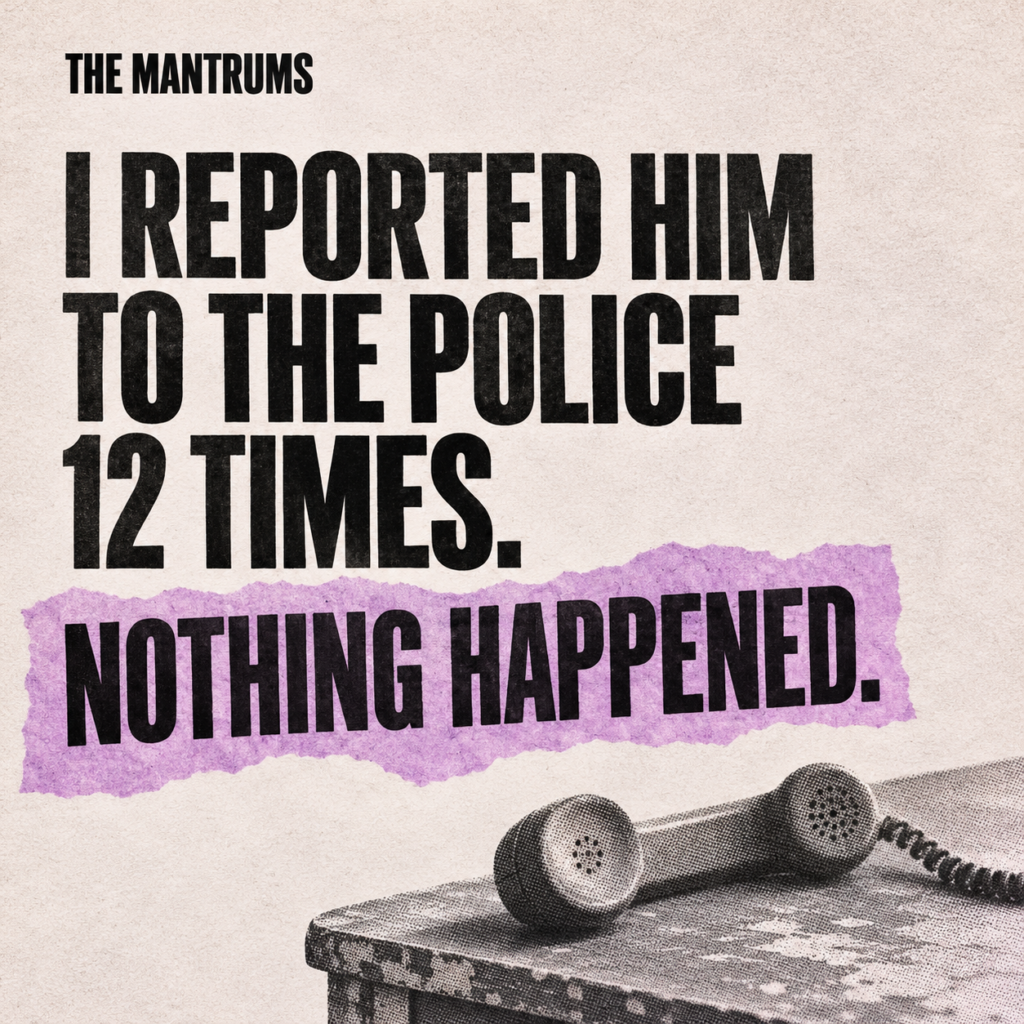
“I reported him to the police 12 times. Nothing happened.”
“I begged the police for help. They claimed I was the perpetrator.”
“My daughter was murdered. We asked the institutions for help for months. No one would listen.”
These are statements women have made to me this month alone. I speak with survivors every day, and I’ve heard hundreds of similar stories over the years. The details differ, but accusations of police failures are the common theme. Women repeatedly tell me about turning to the police for help only to leave feeling abandoned by those supposed to protect them.
I don’t claim police intervention alone will solve Australia’s domestic violence crisis. Domestic and Family violence in Australia is complex. No single cause, risk factor, or solution explains it, or will fix it. I’ll be the first person to say preventing violence takes more than policing or government action. It needs specialist support, education, safe housing, financial security, and programs. But I refuse to ignore the stories women share with me about police responses leaving them feeling less safe, less believed, and more alone.
It’s been drummed into us since we could talk to call the police when we need protection, are in danger, or need a pathway to justice. But what happens when we follow that advice and help never arrives? What happens when police refuse to listen? What do victim-survivors do when wrongly identified as perpetrators? What if their statements aren’t taken seriously or their reports get lost? Where do we go when we’ve done what we were told but feel failed at every turn?
Australia faces a serious and ongoing crisis of violence against women. The Australian Human Rights Commission describes gender-based violence as “endemic” and calls it an urgent human rights issue. Domestic and family violence disproportionately affects women and children. In 2025, journalist Jess Hill reported that police across Australia were receiving almost 10,000 family violence reports a week, or roughly one a minute. I don’t doubt the scale of demand. I don’t doubt that many well-intentioned police officers are doing their best.
But how can workload and resource pressures explain police dismissing family violence, responding with racism and sexism, or wrongly identifying victim-survivors as perpetrators? Or police colluding with abusers? These experiences are documented in Harm in the Name of Safety, a report from the Beyond Survival Project, Flat Out and RMIT University. It’s based on accounts of 225 frontline workers in Victoria. I certainly don’t doubt their accounts either.
They describe situations where police frequently downplayed or dismissed abuse. Where police acted in racist, sexist, and discriminatory ways. And where police sided with perpetrators. They saw cases where victim-survivors were wrongly labelled as perpetrators. Many workers encountered cases in which police officers themselves were using violence as family abusers.
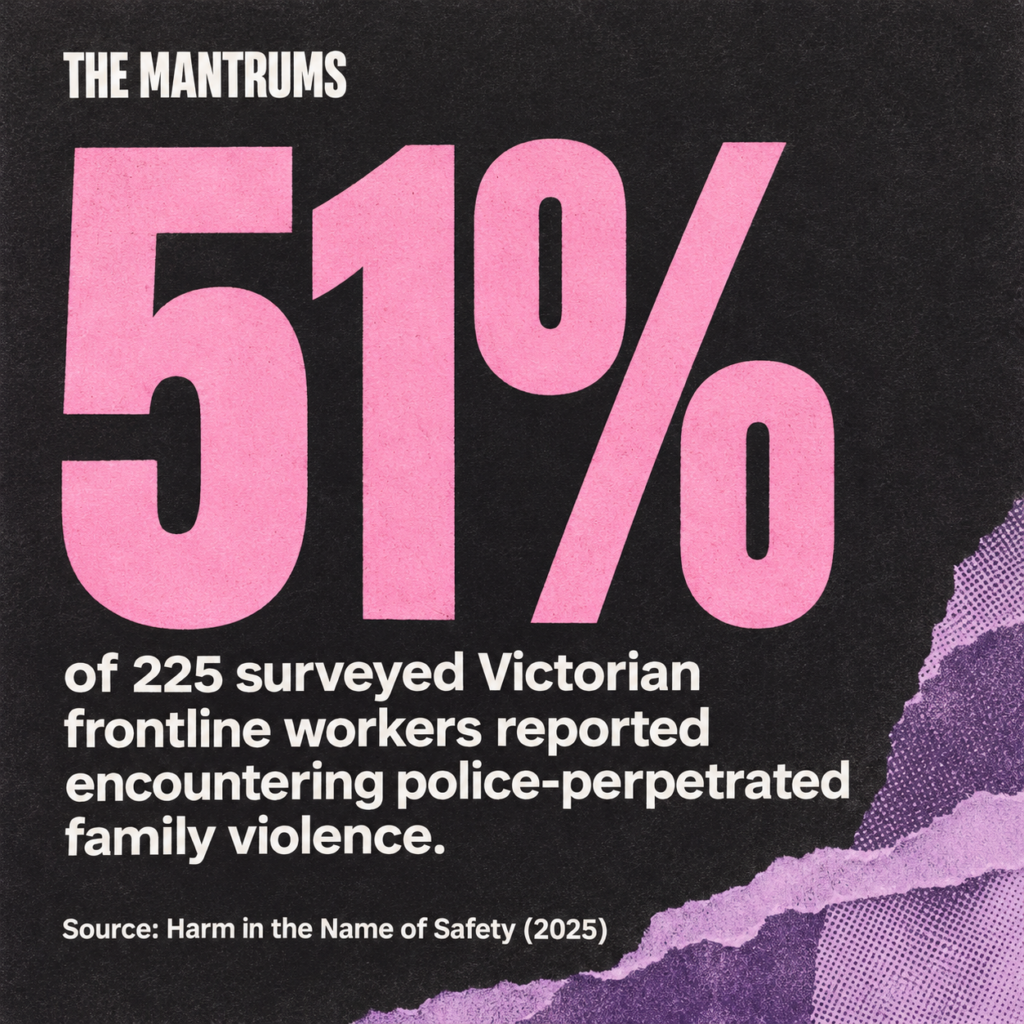
More than half (51%) of these workers reported encountering police-perpetrated family violence, some describing institutional protection of abusive officers. For these women, every barrier to seeking help carries the added burden the person hurting them belongs to the institution they are supposed to turn to for protection. I can’t imagine how helpless that must feel. I can’t imagine the hopelessness and fear.
The report demands immediate action to address police-perpetrated family violence and to stop police from investigating complaints about their colleagues. That should be an obvious conflict of interest, but here we are, I guess. It recommends mandatory reporting of data on harms caused by family violence policing, funding services supporting those affected, a community-based first responder pilot, and a community-led truth-telling inquiry.
Most victim-survivors I speak with would welcome a community-based response, but how would that look in practice? Ideally, a specialist family violence service responds directly to a victim-survivor. They offer a centralised service with safety, housing, and ongoing support without needing a police report first. But what would it take to make this possible, and would governments fund it?
Specialised support services help. 1800RESPECT offers 24/7 counselling, information, and referrals by phone, text, and online across Australia. But 1800RESPECT also faced scrutiny after journalist Nina Funnell reported confidential counselling records obtained through subpoenas had sometimes reached accused perpetrators or their lawyers. In response, 1800RESPECT said it had provided no records to courts in response to subpoenas issued by defendants in criminal proceedings since 1 July 2022. Once again, it’s women forced to live with the consequences when another institution supposed to protect them causes further harm.
Other services are available, but each has a different purpose, and the gaps mean women and children keep falling through the cracks. A counselling line, legal appointment, or financial assistance package can’t provide immediate, in-person responses when someone is in danger.
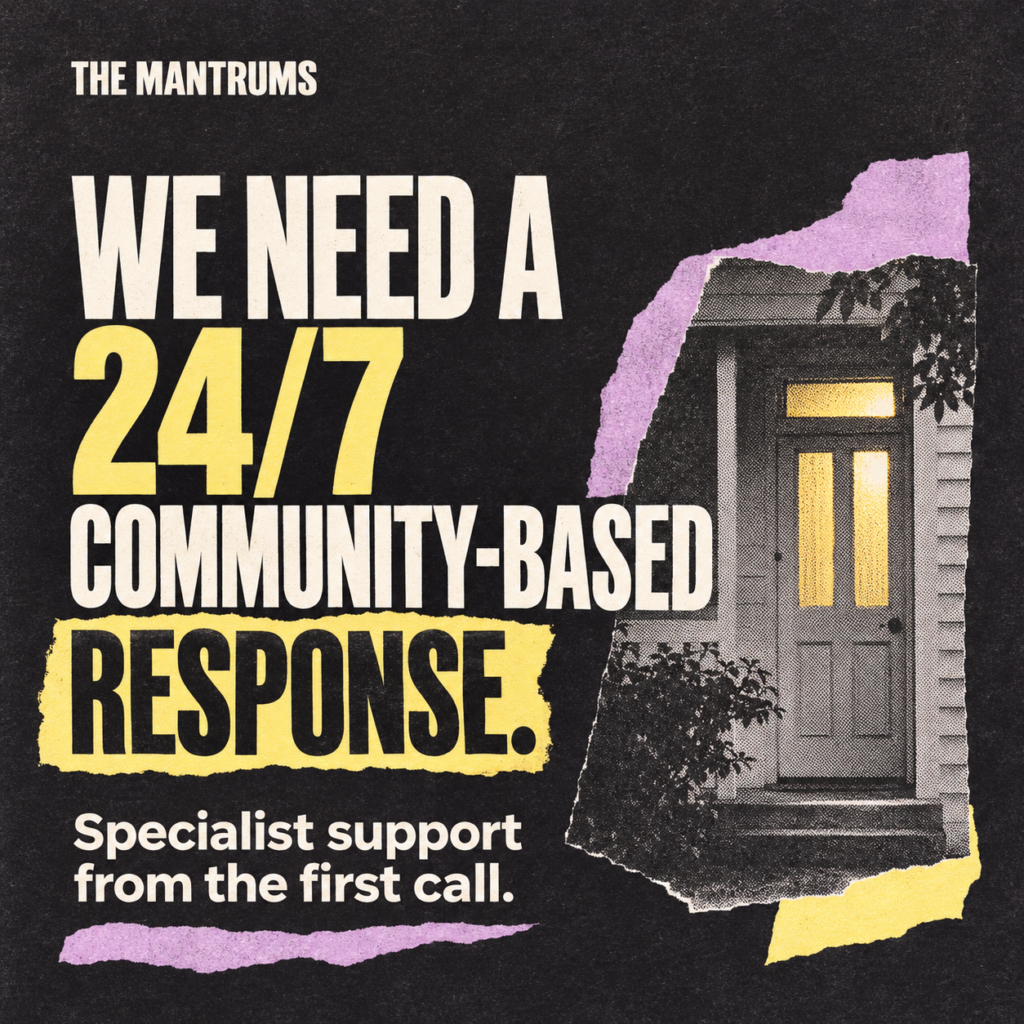
We need a 24/7 community-based response staffed by specialist workers. The support can’t end after the first night. When you’re trying to get safe, you shouldn’t have to tell your story to someone new or be passed between services every time you need help. Is it too much to ask for one dedicated worker from the first call or visit?
Someone who stays with you and helps you find safe housing, access money and legal advice, secure your phone and online accounts, and keep your kids and pets safe. That support needs to last beyond the immediate crisis because getting through the first night is only the beginning.
Survivors deserve agency. We must know our options and have a say in decisions affecting our safety and how we live. If an institution has harmed us, we need to choose whether we feel safe going back and still have somewhere else to turn for help if we don’t. This should be the bare minimum.
Sometimes we need police. Any community-based response has to deal with the hard stuff too. What happens when someone keeps stalking a woman after she leaves? What happens when threats escalate, a weapon is involved, or she’s in immediate danger? We need a clear emergency plan and trained, well-paid people to respond. There also needs to be separate responses for the person using violence. A woman’s safety can’t depend on whether the person hurting her cooperates.
I’d like to see a pilot for community-based first responders, find out what works, and fix what doesn’t. And the best way to judge its success is by listening to the lived experiences of women who use it. Are they safer? Do they have somewhere stable to live? Do they have a say over what happens next?
The Domestic, Family and Sexual Violence Commission’s 2026 report to Parliament makes it hard to argue we’re achieving enough. Funding and reforms have increased, but the national response still falls short of what’s needed. The Commission points to the harm people can experience in the family law and justice systems. Just because you go to a system for protection doesn’t mean it won’t end up hurting you instead.
The figures on sexual violence should scare the hell out of us all. The number of sexual assault victims recorded by police reached a record high in 2024 and fell by less than one per cent in 2025, to 39,758. That’s only what made it into police records. Think about how many people never felt safe enough to report in the first place.
The Commission calls for earlier intervention, better services for people who face the biggest barriers to safety, and practical support so people can recover. I want to see governments act on those recommendations. I also want a clear answer on whether they will fund a community-based first responder pilot. We’re still waiting for that commitment.
Governments already fund some services outside policing. I want to know whether federal, state, and territory governments will work together so a woman gets a specialist worker, a safe place to stay, and practical help that lasts beyond the immediate crisis, with a real choice about who turns up when she asks for help.
That takes ongoing funding, independent reviews, and a willingness to listen to women who say police involvement made things worse. We have reports telling us where the harm is happening. I want to know what governments will fund, when women can access it, and who will answer for it if the help never comes. Women have already spent too much time and energy just trying to survive.
Call me a pessimist, but I doubt this is coming. Here in Queensland, David Crisafulli’s government reduced domestic and family violence prevention funding by $38.5 million compared with the previous year’s budget. ABC News also reported a $42 million cut to the state’s emergency housing program. I don’t know how women are supposed to look at those decisions and feel like our safety is a priority.
The kindest thing I can say about Albanese’s response to gender-based violence is it’s been lacklustre. NSW passed its one-punch laws nine days after announcing them. I want that same energy from Canberra on gender-based violence. Fund a 24/7 community-based response with specialist workers who stick with survivors from the first call, now.
Until the federal government listens to victim-survivors and acts with the urgency their experiences demand, we’ll keep seeing reports like Harm in the Name of Safety document the same police failures. And I’ll keep hearing from women who did what we tell them to do and were harmed by the people who were meant to help them.
Listening has to change what the government funds and what happens when someone reaches out. A woman should be able to call for help at any hour, speak to a specialist worker, and know that person will be there when she needs help finding somewhere safe to live. She shouldn’t have to tell her story repeatedly just to get the support she asked for the first time.
I hear from women who’ve been failed by the system every day. Those are just the women still alive to tell me.